
Fuel cell stacks are laminated assemblies of bipolar plates, MEAs, sealing gaskets and insulation components. The core challenge of stack assembly is not simply pressing to a fixed position, but to achieve uniform compression of all sealing layers, sufficient stress relaxation and consistent clamping force across the whole stack to meet long-term gas tightness requirements. Traditional hydraulic presses suffer from pressure drift, pressure loss during long holding cycles and uncontrollable impact, which easily lead to crushed sealing lines, damaged MEAs, uneven local pressure and hydrogen leakage.
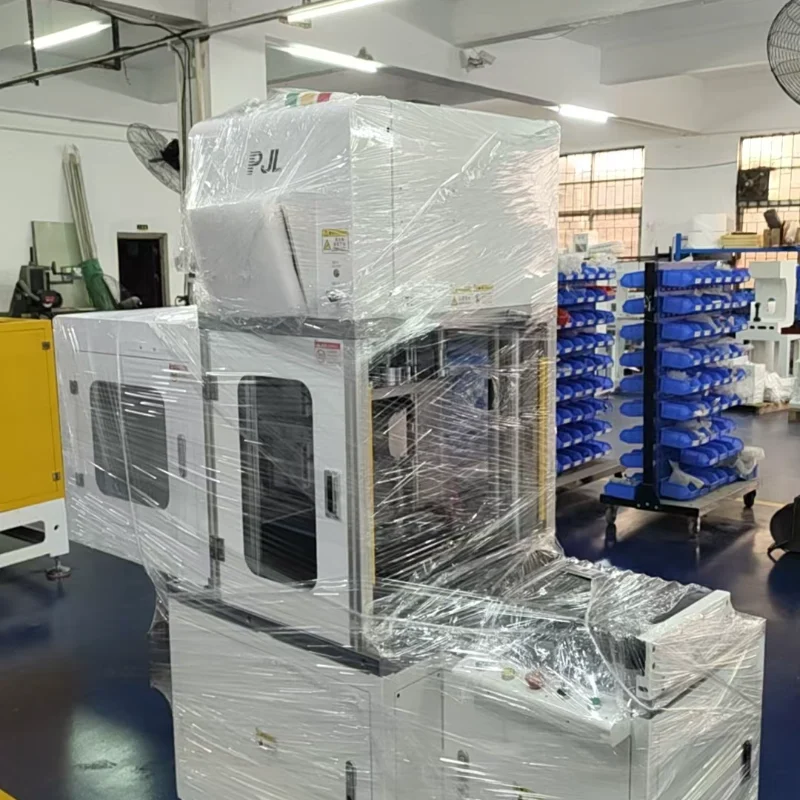
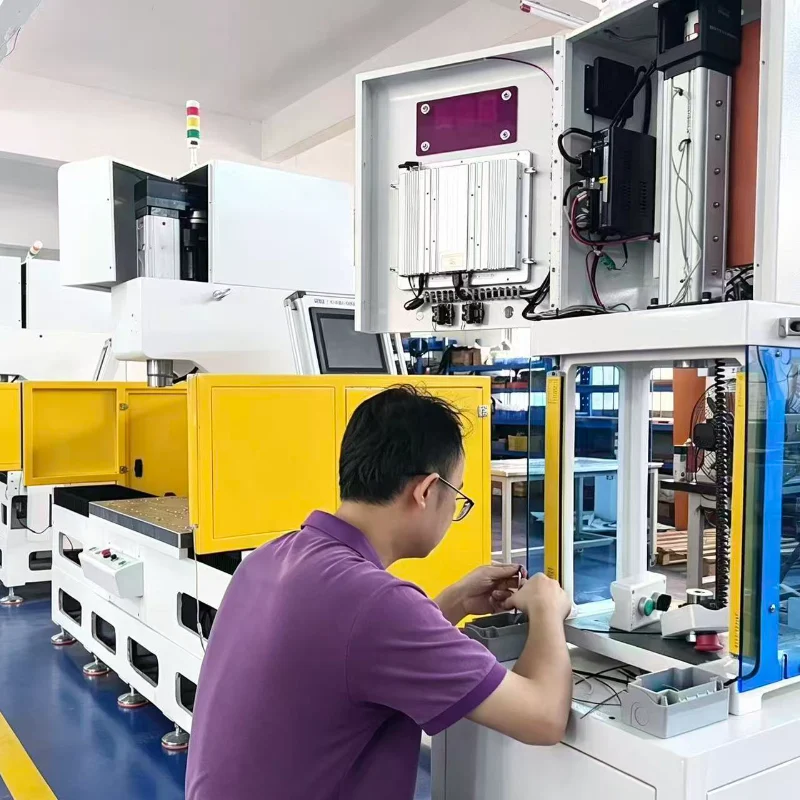
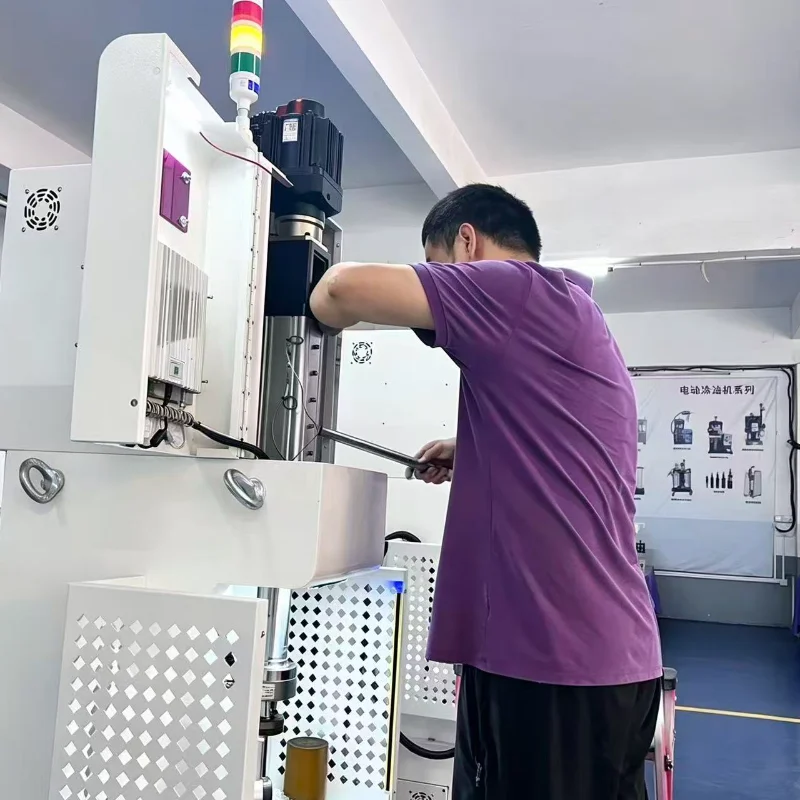
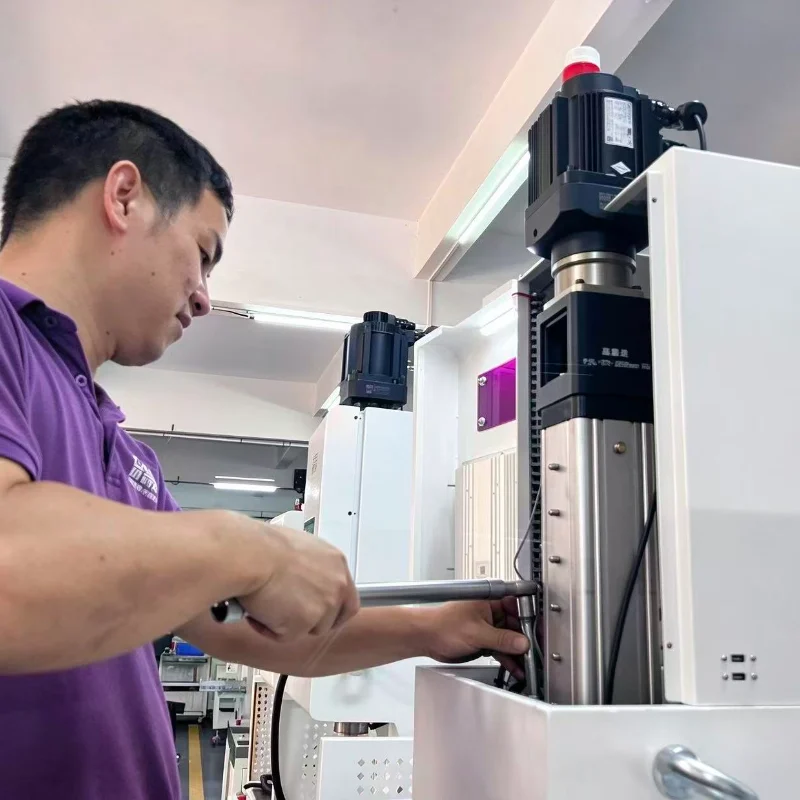
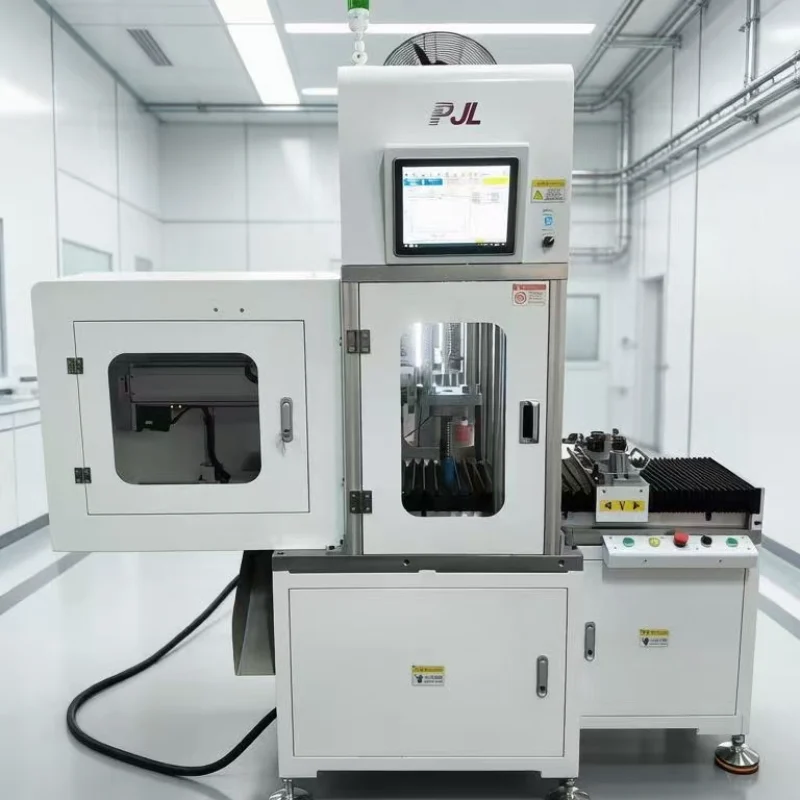
Servo press machines adopt closed-loop force control, staged flexible loading, stable long-duration pressure holding and real-time force-displacement curve monitoring. The stack assembly and helium leak test can be completed in one station, making it a mainstream process solution for mass production of fuel cell stacks.
1. Main Challenges of Constant Pressure Holding for Stack Assembly
- Stress relaxation of multi-layer stacks Sealing rubber and gaskets are viscoelastic materials. Pressure naturally decays under constant compression. Without active pressure compensation, gasket compression drops gradually and sealing gaps appear, causing gas leakage.
- Impact damage to MEAs and bipolar plates MEAs are fragile and graphite bipolar plates are brittle. Fast loading and impact can cause MEA wrinkling or graphite cracking, which are often invisible defects.
- Poor pressure uniformity across the stack Thickness tolerance accumulates with stacking layers. Fixture misalignment or unparallel platens create uneven clamping force, resulting in inconsistent single-cell performance and shortened service life.
- Gas tightness test under sustained holding pressure Mass production often requires leak testing with nitrogen while the stack remains under constant clamping force. Holding time may range from tens of minutes to several hours. Excessive pressure fluctuation will invalidate leak test results.
- Difficult recipe control and traceability Hydrogen energy industry requires full part traceability. Conventional equipment lacks curve logging and recipe management, making root-cause analysis difficult when field leakage occurs.
2. Working Principle of Servo Constant Pressure Holding
Servo presses combine servo motors, high-precision load cells and linear grating scales under force-priority closed-loop control. Different from simple position locking, the system treats target force as the primary control target. When stack pressure drops due to material creep, the servo automatically fine-tunes position to restore pressure within the set tolerance window, realizing true constant force holding. Force accuracy reaches ±0.5%FS and positioning accuracy ±0.01 mm.
The standard stack process includes four phases:
- Soft contact pre-pressing: Slow approach and gentle contact to eliminate impact. Low preload corrects stacking offset and detects initial contact status.
- Stepwise pressure ramp-up: Gradually increase force in multiple steps to release interlayer stress and avoid local overstress.
- Constant pressure relaxation phase: Maintain target clamping force for stress relaxation, allowing sealing gaskets to creep and stabilize. Gas leak test can run simultaneously during this holding stage.
- Judgment and locking: If holding pressure window and leak rate pass OK criteria, the system triggers stack bolt locking. NG parts are flagged and isolated.
3. Key Design Considerations
- High-rigidity frame and parallel platens Rigid four-post structure and precision-ground platens minimize structural deflection during long holding cycles. Optional multi-point pressure sensing detects uneven loading.
- Modular process recipe management Recipes for different stack power ratings, graphite or metallic bipolar plates store force, speed, holding time and inspection thresholds. Version control prevents parameter misoperation. SPC functions monitor pressure decay trends for incoming material early warning.
- Force-displacement envelope inspection Real-time curve comparison against golden sample envelope limits identifies abnormal events such as stacking misalignment, foreign particles and incoming dimension drift before defective stacks flow downstream.
- Full traceability and MES connectivity Scan and bind each stack with SN code. The system stores barcode, timestamp, process parameters, full force-displacement curve, pressure decay log and leak result. Communication via Profinet / Modbus supports factory MES integration.
- Clean and safe design All-electric servo design eliminates hydraulic oil contamination, suitable for cleanroom. Overload protection, soft limit and safety light curtains prevent over-pressure damage to MEAs and plates.
4. Solution Benefits
✅ Dynamic pressure compensation offsets gasket creep, stabilizes sealing compression and reduces stack leakage rate ✅ Staged low-speed loading eliminates impact and protects MEAs and graphite bipolar plates ✅ Uniform clamping improves single-cell consistency and stack power performance ✅ Integrated holding + leak test station simplifies production layout ✅ Curve-based quality control + full data traceability meets hydrogen industry quality standards